Workshop for Graduate Students on Detecting Fake Journals and Combating the "Fake Impact Factor"
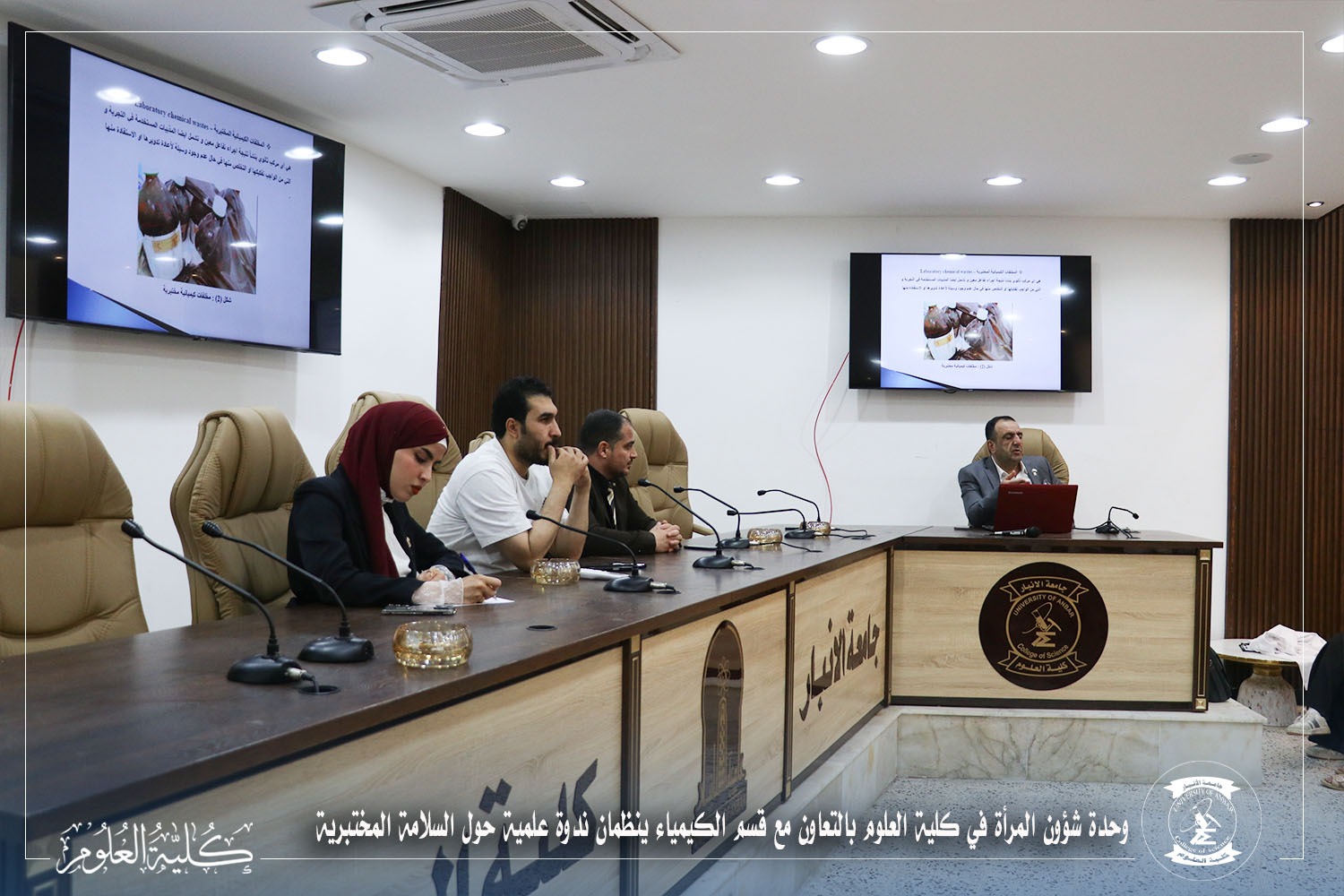
The College of Science held a specialized scientific workshop for postgraduate students on Tuesday, November 18, 2025, in the Jaber Ibn Hayyan Hall at the college. The workshop, titled "Fake ISI Journals: The Story of Fake Impact Factor Companies and How We Detected Them," was of paramount importance.
The workshop addressed the topic of fake journals, their history, and how to detect and avoid them.
The workshop was presented by Professor Dr. Mohammed Abdul Karim Talak, a faculty member in the Chemistry Department, and Assistant Professor Dr. Mustafa Riyadh Mohammed, a trainer in the Biotechnology Department. The lecturers highlighted the phenomenon of "predatory journals" and fraudulent publishing companies that exploit researchers' need for publication, and how these companies promote what is known as the "Fake Impact Factor." The workshop primarily aimed to equip graduate students with the critical and technical skills necessary to distinguish between reputable scientific journals and predatory/predatory journals, identify indicators of fraud in predatory databases, select reliable global platforms and repositories for publication (such as Scopus and Web of Science), and protect scientific research from being lost or marginalized.
For his part, the Dean of the College of Science, Professor Dr. Ismat Ramzi Abdul Ghafour, praised the workshop and the importance of its topic, emphasizing that protecting students and researchers from falling prey to predatory journals is a top priority for ensuring the quality of scientific research.
During the lecture, Professor Dr. Muhammad Abdul Karim Talak stated that "awareness of international publishing standards is the first line of defense for the value of our research. Researchers must be meticulous and cautious to ensure that their scientific work is published on a platform worthy of it, far from the illusion of predatory journals."
.


